How the German shipbuilding industry is benefiting from Asia’s success
Asia builds the most ships – but the German shipbuilding industry benefits from each of these contracts. The reason for this is that a ship’s hull accounts for only a small proportion of the value added. Around 80 % of the value lies in the high-quality components, and Germany is the market leader in this field. Why Germany’s specialisation in innovation is the smarter strategy – and what this means for the demand for skilled workers.
Table of contents
- How the German shipbuilding industry is benefiting from Asia’s success
- What impact is Asia’s success having on the German shipbuilding industry?
- What risks do Asian countries face?
- Why is Germany taking a different approach?
- Where does a ship’s true value lie?
- Which components does Germany supply?
- How do the profit margins differ?
- Why is the relationship between Germany and Asia symbiotic?
- Why is Germany’s focus on innovation the right approach?
- What does the future hold for the German shipbuilding industry?
- What sort of skilled workers does the German shipbuilding industry need?
- Enquire about skilled shipbuilding workers from Eastern Europe
- Frequently asked questions
Estimated reading time: 8 minutes
What impact is Asia’s success having on the German shipbuilding industry?
In a nutshell: South Korea, Japan and China are among the leading shipbuilding nations because they have been strategically supporting the industry for decades. The governments ensure their shipyards have a competitive edge by supporting clients with loans, guarantees and other financing instruments – in some cases even going so far as to assume the full financial risk involved in shipbuilding.
This article examines how this state-driven industrial policy came about in Japan, South Korea and China Yacht support vessels: Specialised support vessels and their specialist requirements.
What risks do Asian countries face?
Whilst state support does strengthen the competitiveness of shipyards, it shifts part of the economic risk onto the public purse. If shipping companies are unable to service their loans or if contracts run into difficulties, state funding bodies must cover any losses, guarantees or failed financing arrangements.
Why is Germany taking a different approach?
In the international shipbuilding sector, Germany focuses primarily on high-quality, technically sophisticated components – such as propulsion, automation, navigation and environmental technology. These systems generally generate significantly more value than the mere construction and assembly of a ship’s hull.
Whilst many ships are built in Asian shipyards, the German industry supplies key systems and equipment for them. It thus benefits from the global demand for newbuilds without having to bear the high financing and default risks associated with shipbuilding projects itself. These risks lie primarily with the financing states and the shipyards in the producing countries.
Where does a ship’s true value lie?
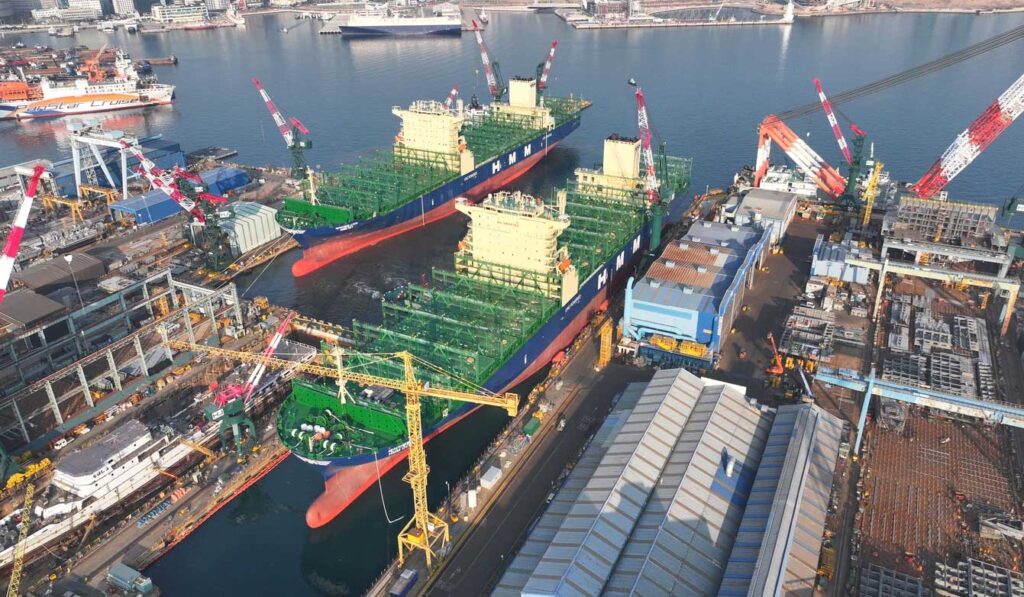
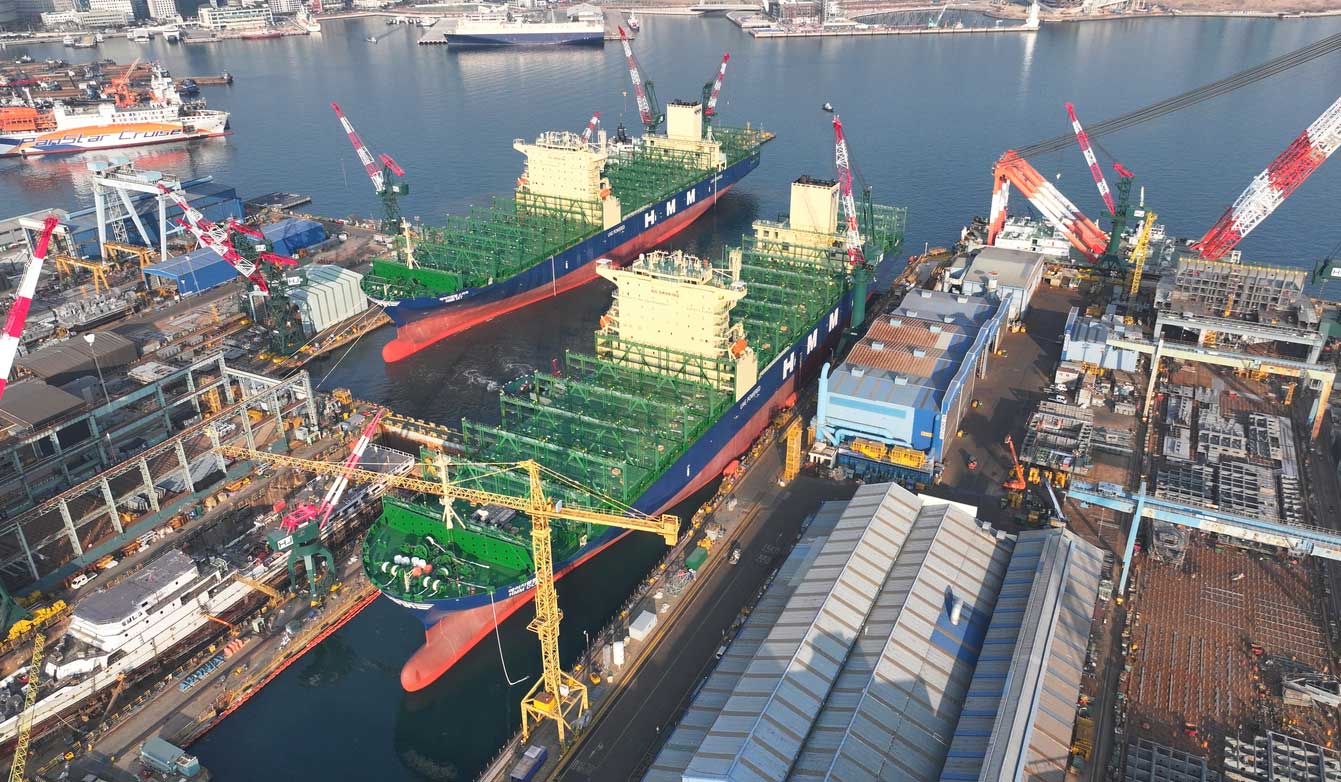
Asian shipyards focus on transforming large quantities of steel into hulls and superstructures. These floating boxes account for 80 % to 90 % of the ships’ structure.
However, around 80 % of a ship’s value is derived from its built-in components. These form complex mechanical and electrical systems. They require highly skilled engineering, decades of experience and access to cutting-edge technology. It is these components that enable the ships to function as an integrated system capable of carrying out their tasks. When it comes to the manufacture of these components, Germany is the market leader. The following are produced here:
Marine diesel
For example, from MAN and MTU
Drive systems
For example, NMG propellers
Systems for automation, navigation and control
Control of all on-board electronic systems
Auxiliary drives & auxiliary machinery
Turbochargers, power units and auxiliary systems
Which components does Germany supply?
German industry primarily supplies high-quality key technologies for ships, including large diesel engines, propellers, propulsion systems, and control and automation systems. These components are technically sophisticated and account for a significant proportion of a ship’s value: A single marine diesel engine can cost up to 50 million US dollars and account for around a quarter of a ship’s total value. Propellers also demonstrate high added value – with manufacturing costs of around 1.2 million euros, they can fetch around 3 million euros on the market.
How do the profit margins differ?
Asian shipyards operate with very small profit margins, which are sometimes less than 10 %. German technologies, by contrast, achieve significantly higher profit margins, which often exceed 20 %. Yet German companies do not need to operate large-scale shipyards. They focus on what they do best: developing innovations and technical expertise that other nations then require for shipbuilding.
Why is the relationship between Germany and Asia symbiotic?
This gives rise to symbiotic relationships within the global shipbuilding industry. Asian shipyards benefit from their ability to build thousands of ships efficiently. In other words, they benefit from what are known as economies of scale.
On the other hand, the German shipbuilding industry supplies the advanced components that give the ships their functionality and performance. German industry therefore benefits from every order placed in Asia.
For both sides, this means they can focus on what they do best. For Asia, this is processing large quantities of steel and manufacturing ship hulls. For Germany, this is innovation and the supply of modern plant and systems.
Why is Germany’s focus on innovation the right approach?
Germany’s focus on innovation is the right approach. It would make little sense to compete with Asian shipyards in the mass production of steel and ship hulls – they are particularly efficient and well-established in that area. Nor should Germany assume the financial risks associated with shipbuilding contracts, as some Asian countries do.
Instead, it still makes sense to invest in technology and skills. The resulting innovations strengthen the German shipbuilding industry’s position as a supplier in the global market. Its components are indispensable there, meaning that Germany will continue to benefit from all the ships built in Asia and sailing the world’s oceans. The ships do not need to be built in Germany for this to happen.
What does the future hold for the German shipbuilding industry?
The future of shipbuilding in Germany depends on how the political, business and research sectors work together. A clear maritime strategy, with targeted support for shipbuilding in conjunction with European shipbuilding policy, will enable Germany to hold its own in global competition.
Whilst countries such as South Korea, Japan and China shape the global shipbuilding industry through their industrial policies, they usually supply only the steel and the hulls. It is the high-tech components – some of which also come from Germany – that turn these hulls into fully functional ships. As a result, Germany benefits as a supplier and has successfully established itself as a market leader in high-tech equipment and systems.
What sort of skilled workers does the German shipbuilding industry need?
Germany’s strengths – high-quality components, innovation and precision – stand or fall on the availability of skilled workers. It is precisely in the manufacture of marine diesel engines, propulsion systems, automation and navigation electronics that experienced hands are in demand. Where the domestic labour market falls short, skilled workers from Eastern Europe bring with them solid craftsmanship and growing experience in modern production environments.
Welder & CNC operator
Precision manufacturing of components and assemblies
Mechanics & Industrial Mechanics
Installation of drive systems, motors and auxiliary units
Electricians & Electronics Technicians
Automation, navigation and control systems
Cutting machine operator
Manufacture of propellers, shafts and precision components
Quality Assurer & Test Technician
Inspection of high-quality components to tight tolerances
Enquire about skilled shipbuilding workers from Eastern Europe
Do you manufacture high-quality marine components and need qualified welders, mechanics, electronics technicians or machinists? We recruit experienced staff from Poland, the Czech Republic, Romania and other EU countries – quickly, in full compliance with the law and with the right qualifications.
Frequently asked questions
Why does Germany benefit, even though most ships are built in Asia?
Although a ship’s hull accounts for 80 % to 90 % of the structure, it represents only a small proportion of the value added. Around 80 % of a ship’s value lies in the components fitted on board, a sector in which German companies are among the market leaders. German industry therefore benefits from every order placed in Asia.
What high-quality components does Germany supply?
These include marine diesel engines (such as those from MAN and MTU), propulsion systems such as NMG propellers, systems for automation, navigation and electronic control, as well as auxiliary drives, auxiliary machinery and turbochargers.
How valuable are these components?
A single marine diesel engine can cost up to 50 million dollars, accounting for a quarter of the ship’s value. A propeller costs around 1.2 million euros to manufacture and fetches up to 3 million euros on the market – more than double the manufacturing cost.
Why are German profit margins higher than those in Asia?
Asian shipyards operate with profit margins that are in some cases below 10 %, whilst German technology providers often achieve margins in excess of 20 %. Germany focuses on innovation and technical expertise rather than on the capital-intensive operation of large shipyards.
Why is specialising in components the right strategy?
It makes little sense for Germany to compete with Asia in the mass production of steel and ship hulls, or to assume the financial risks faced by clients. As a supplier of irreplaceable high-tech components, however, Germany benefits from all ships sailing worldwide – regardless of where they are built.
What is the legal procedure for seconded EU staff?
Full freedom of movement for workers applies to EU citizens. We apply for A1 certificates, ensure AÜG compliance and take care of minimum wage reporting to customs - completely and without any effort on your part.
Do you need shipbuilding subcontractors on a contract basis instead of temporary labour? Our sister platform takes care of that zeitarbeit-international.de.
Similar topics