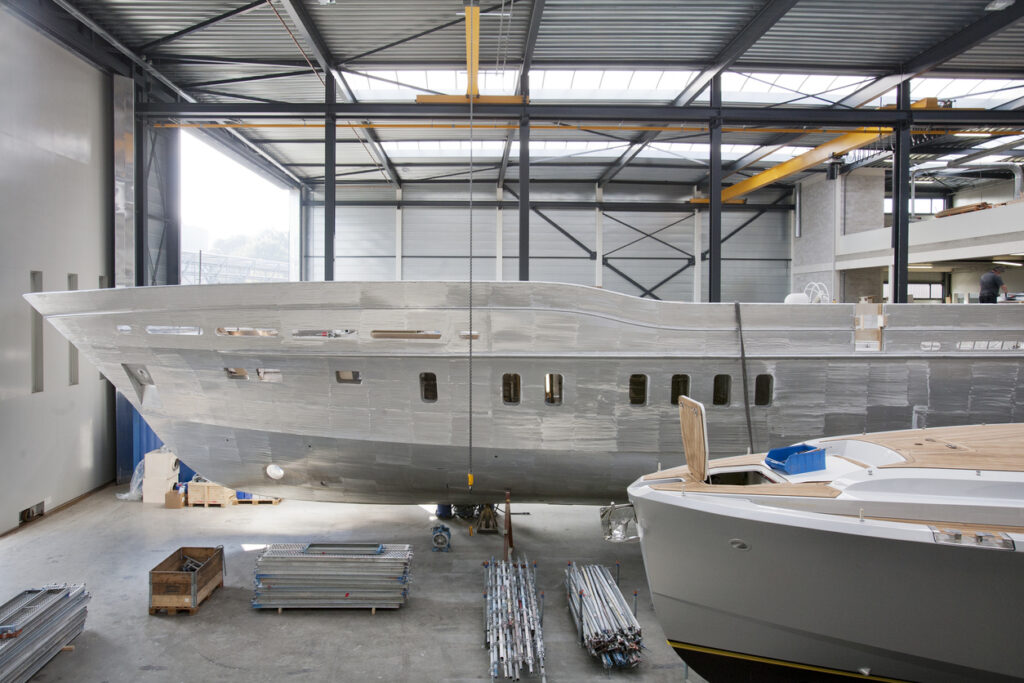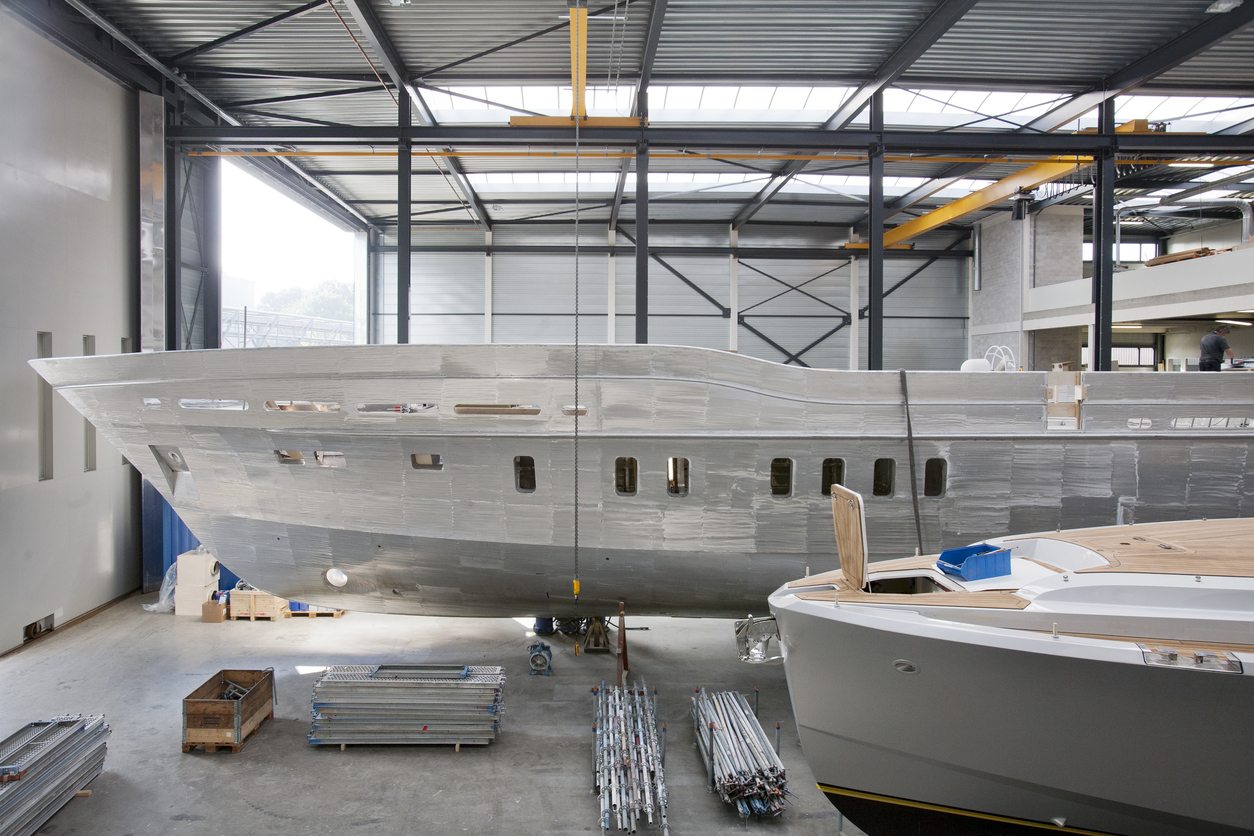
Digitalisation in yacht and shipbuilding: smart ships, digital twins and the transformation of the industry
Shipbuilding is undergoing a profound change - comparable to the transition from wood to steel or from steam to diesel. Digitalisation, automation and sustainability are not only changing how ships are built, but also which skilled workers are needed.
Table of contents
- Digitalisation in yacht and shipbuilding: smart ships, digital twins and the transformation of the industry
- What needs does a yacht fulfil?
- What are the major trends in modern shipbuilding?
- How has digitalisation also influenced yacht building?
- What does this mean for shipyards and skilled workers?
- Which skilled workers are needed?
- Request yacht building personnel from Eastern Europe
- Frequently asked questions
Estimated reading time: 5 minutes
What needs does a yacht fulfil?
Anyone who builds a yacht faces special challenges: Hundreds of special requests, customised production of everything from technology to bespoke furniture, the highest quality standards - and clients who have no patience with delays. Before delivery, every scratch is criticised and the yacht has to prove that it meets all the owner's technical parameters.
It is precisely these demands that make yacht building a driver of innovation: because price plays a subordinate role and quality is everything, engineers here have the space to develop and utilise new technologies - concepts that are later transferred to commercial shipping. Yacht building thus strengthens the entire German shipbuilding expertise and secures highly qualified jobs.
What are the major trends in modern shipbuilding?
Size, load capacity and speed used to dominate. Today, four other topics take centre stage:
digitisation
CAD/CAE, digital twins, networked production, BIM and PLM - the entire life cycle of a ship is mapped digitally
Energy efficiency
Optimised hull shapes, alternative drives, waste heat utilisation - cost reduction and emission reduction in one
Automation
Welding robots, laser cutting systems, automated storage and transport systems - more precision, lower costs
Sustainability
Green shipbuilding with alternative fuels and sustainable materials - a prerequisite for operation in strict emission zones
How has digitalisation also influenced yacht building?
Today, digitalisation permeates the entire life cycle of a ship - from the first sketch to the final maintenance.
Design: CAD & CAE
Ships are created on the computer. Precise 3D models fully depict complex structures, cabins, pipe systems and technical equipment - long before the first steel is cut.
Digital twin
The virtual model becomes the digital twin of the real ship. Engineers recognise potential problems even before construction begins: collisions in pipe systems, unstable weight distribution, defects in weld seams. Changes are simulated before they are expensively implemented in reality.
Networked production
Sensors in machines and tools provide real-time data. Progress is monitored, errors are detected immediately and processes are continuously optimised. Centrally collected data makes processes repeatable, improvable and verifiable - a huge benefit for quality assurance.
Collaboration: BIM & PLM
Project teams, suppliers, classification societies and clients work together directly via digital platforms. Building Information Modelling (BIM) and Product Lifecycle Management (PLM) reduce sources of error and shorten construction times.
Smart Ships in operation
Modern information and communication technologies monitor the entire ship in real time. The crew and automated systems work together to control operations and continuously optimise processes.
What does this mean for shipyards and skilled workers?
Digitalisation is fundamentally changing the requirements for skilled workers in shipbuilding. Traditional skilled trades remain indispensable - but they are being supplemented by digital expertise: welders who work with automated systems, electricians who integrate sensor systems, engineers who maintain digital twins.
At the same time, manual labour remains indispensable in critical areas - especially in the demanding yacht and superyacht construction sector. Eastern European specialists cover both sides: classic craftsmanship at the highest level and growing experience with modern, digitalised production environments.
Which skilled workers are needed?
Welder & CNC operator
Working with automated welding systems and laser cutting machines - precision in networked production
Electricians & system integrators
Sensor integration, networked on-board technology, smart ship systems, quality assurance electronics
Shipbuilder & Steelworker
Hull construction, section assembly, structural work - still indispensable despite increasing automation
Carpenters & interior fitters
Customised one-off products for yachts and support vessels - handcrafted to the highest standard
Quality Assurer & Test Technician
Inspection and documentation in the digitalised production process - NDT, weld seam inspection, system tests
Mechatronics & IT technician
Integration of automation systems, networked machines and digital control platforms
Hull construction, deck superstructures, flybridge constructions, boat deck integration
Request yacht building personnel from Eastern Europe
Are you looking for qualified specialists for electrics, interior fittings, plumbing or system integration at your shipyard? We provide experienced personnel from Poland, the Czech Republic, Romania and other EU countries - quickly, legally compliant and with the right qualifications.
Frequently asked questions
Do Eastern European specialists have experience with automated production systems in shipbuilding?
Polish, Czech and Romanian shipyards and industrial companies are increasingly focussing on automated production processes. Many skilled workers have experience with CNC systems, welding robots and networked production systems.
Are there quality assurance experts from Eastern Europe with maritime experience?
We can search specifically for inspection technicians and quality assurance engineers with experience in the shipbuilding industry - including NDT (non-destructive testing) qualifications and weld inspection to maritime standards.
What is the legal procedure for seconded EU staff?
Full freedom of movement for workers applies to EU citizens. We apply for A1 certificates, ensure AÜG compliance and take care of minimum wage reporting to customs - completely and without any effort on your part.
Can skilled labour from Eastern Europe also be deployed in the demanding superyacht segment?
We select specialists with proven experience in high-quality projects - whether interior fittings, electrics or structural work. Proof of qualifications and references are checked in advance.
How quickly is staff available?
Usually within 1-3 weeks. For complex requirement profiles - specific certifications, system knowledge or language skills - we recommend that you enquire at an early stage.
Do you need shipbuilding subcontractors on a contract basis instead of temporary labour? Our sister platform takes care of that zeitarbeit-international.de.
Similar topics