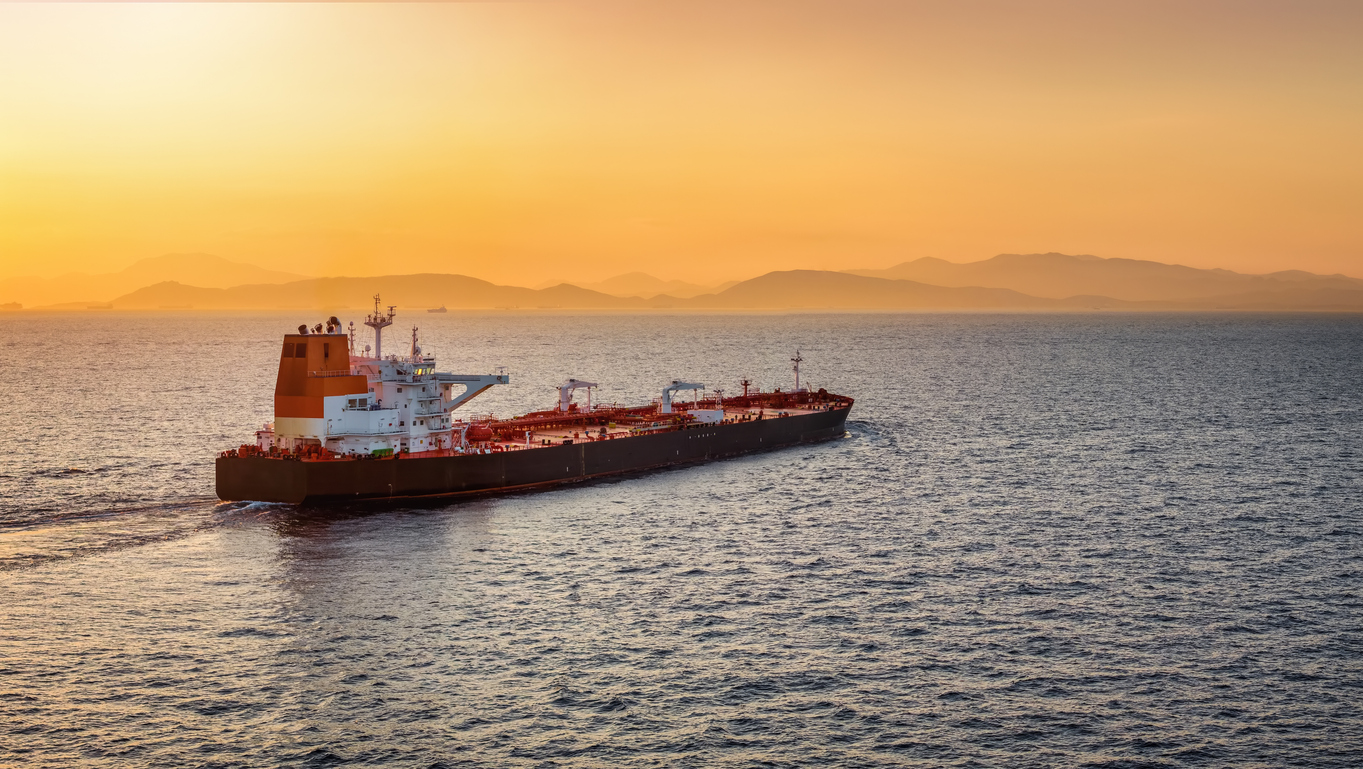
LNG ships, bulk carriers and tankers: design, technology and skilled labour requirements
Bulk carriers, tankers and LNG ships are among the most technically demanding structures in the world. Their construction and operation requires highly specialised skilled workers, which are becoming increasingly scarce in Germany. Eastern European specialists with relevant shipyard experience are filling this gap.
Table of contents
- LNG ships, bulk carriers and tankers: design, technology and skilled labour requirements
- What is a bulk carrier?
- What tasks does a tanker fulfil?
- How do LNG ships work?
- How are these ships produced?
- Which skilled workers are needed?
- Request shipbuilding specialists from Eastern Europe
- Frequently asked questions
Estimated reading time: 5 minutes
What is a bulk carrier?
Bulk carriers transport huge quantities of bulk goods such as ore, coal and grain. Their cargo holds - known as box holds - have to withstand enormous pressure loads: The heavy bulk goods generate pressure peaks at certain points, which the ships have to withstand undamaged over many years and thousands of loading cycles without deforming.
Engineers calculate both the static loads on the frames when fully and partially loaded and the hydrodynamic forces of the waves that set the ship in motion and change the load distribution inside. Added to this is the continuous protection against corrosion from salt water - a permanent issue in the choice of materials and coating.
Modern bulk carriers are equipped with automatic loading and unloading systems: Grab cranes and conveyor belts speed up handling in the harbour considerably.
What tasks does a tanker fulfil?
Tankers transport liquid raw materials - crude oil, chemicals, refined products. Depending on the type of cargo, they place different demands on materials, pump systems and tank separation. The tanks are divided into smaller compartments to prevent uncontrolled shifts in the centre of gravity due to liquid movements.
Safety is the top priority here: leaks are detected immediately by extensive sensor systems. The tank compartments are inertised - i.e. filled with an inert gas that displaces the oxygen and thus eliminates the risk of fire. Double side walls and fire-fighting systems are standard.
Modern tankers integrate intelligent monitoring systems that analyse hundreds of sensors in real time: pressure, temperature, filling levels - everything is tracked continuously and reported immediately in the event of deviations. Chemical tankers use highly resistant materials; oil and product tankers have special safety systems to protect against environmental pollution and fire.
How do LNG ships work?
LNG ships often use multi-fuel engines that can run on both heavy fuel oil and liquefied natural gas - a flexibility that enables operation in emission control zones. Bulk carriers rely on highly efficient two-stroke diesel engines with low engine speeds. Tankers combine large diesel engines with electric auxiliary drives for pump systems and on-board power supply.
In addition to classic screw drives, pod drives and adjustable propellers are increasingly being used - they significantly improve course stability and manoeuvrability in port. Sophisticated energy management systems optimise fuel consumption and emissions over the entire service life.
How are these ships produced?
The production of these ships is highly mechanised and automated. Nevertheless, critical areas are still dependent on manual labour - the welding of tanks, the assembly of pumps and valves, the installation of control systems. This is where precision, experience and the right certificates count.
Building these types of ships strengthens the German shipbuilding industry and drives innovation in materials technology, propulsion and digitalisation. At the same time, it secures highly qualified jobs at the shipyards - and thus creates a sustained demand for precisely these specialists.
Which skilled workers are needed?
welders
MAG, TIG, submerged arc - certified to DIN EN ISO 9606, experienced in tank and hull welding
Pipeline constructor
Assembly and testing of pipe systems for LNG, fuel, ballast and cooling circuits
Locksmith & Industrial Mechanic
Assembly of pumps, valves, power units and hydraulic systems on board
Electrician & Electrical Technician
Installation and testing of vehicle electrical systems, control systems, sensors and energy management systems
Insulator
Heat and cold insulation for LNG tanks, pipe systems and cryogenic systems
Naval architects
Construction, statics, system integration - particularly in demand for new builds and conversions
Request shipbuilding specialists from Eastern Europe
Are you looking for qualified personnel for shipyards, dry docks or maritime suppliers? We place experienced shipbuilding specialists from Poland, the Czech Republic, Romania and other EU countries - quickly, legally compliant and with the right qualifications.
Frequently asked questions
Which welding certificates are relevant for shipbuilding and tanker construction?
Certifications in accordance with DIN EN ISO 9606 and classification certificates from recognised companies such as DNV, Lloyd's Register or Bureau Veritas are particularly in demand. For LNG tankers, there are also specific requirements for cryogenic materials. We can provide qualification certificates in advance on request.
Can Eastern European experts also be deployed for specialised tanker projects?
We provide specialists with proven experience in chemical tanker and oil tanker construction, including working with highly resistant materials and specialised pump systems. Contact us with your specific requirements.
What is the legal procedure for seconded EU staff?
Full freedom of movement for workers applies to employees from EU countries. In the case of secondment, the A1 certificate must be applied for in advance; in the case of temporary employment, the provisions of the AÜG apply. We guide you through all the administrative steps - from registering with customs to ensuring minimum wage compliance.
How quickly is staff available at the shipyard?
Usually within 1-3 weeks. The prerequisite is that the A1 certificate, proof of qualification and contract documents are prepared in good time. If you have an urgent need, please contact us directly.
Are there also foremen or foremen from Eastern Europe with shipyard experience?
We also provide experienced foremen and technical coordinators who can lead teams at the shipyard. On request, we filter specifically for German language skills and management experience.
Do you need shipbuilding subcontractors on a contract basis instead of temporary labour? Our sister platform takes care of that zeitarbeit-international.de.
Similar topics